How to Root Plant Cuttings After You Buy Them
How to root plant cuttings starts with the node and the moisture method. Match water, moss, or soil to the cutting you actually bought.
By Jordan Wells
Plantsnearby is reader-supported. As an Amazon Associate we earn from qualifying purchases. Learn more.
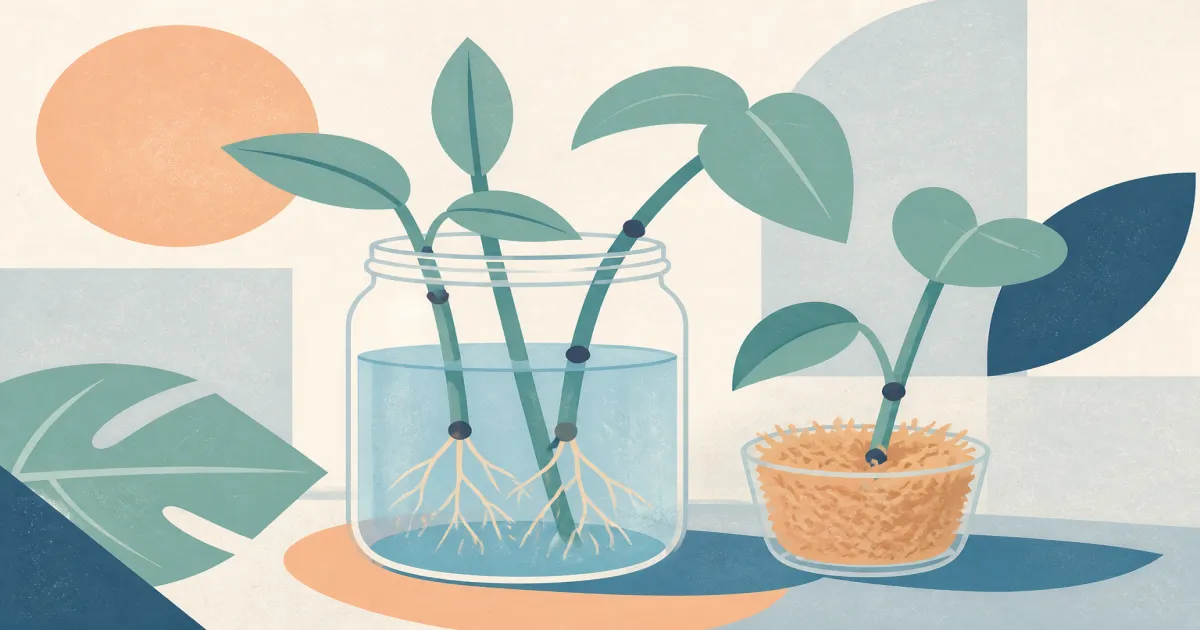
The short answer: How to root plant cuttings comes down to a healthy node, steady moisture without soggy rot, and a method that matches what you bought. Water works for many soft stems. Moss or soil can be better when the cutting needs support or you want an easier move into a pot. Soft or yellow stems rarely recover just because you change jars.
This guide is for buyers who just received unrooted or lightly rooted cuttings, and for sellers who want to explain aftercare honestly. Soft next step: find cuttings with clear node photos on Plantsnearby, then root them before they join your main shelf.
Start with what you actually received
Read the listing again. Tip cutting, node cutting, wet stick, and leaf cutting are not the same product. Our plant cuttings explainer covers the forms. If you paid for a rooted cutting and received bare stem, message the seller with photos before you assume user error.
Check the stem. Firm and green or lightly calloused is workable. Mushy, black, or sour-smelling tissue is not a rooting project. Trim back to clean tissue with a sterile blade if enough healthy stem remains. If nothing firm is left, treat it as a failed shipment, not a slow root.
Pick a rooting method on purpose
Water
Water is the easiest watch method for pothos, many Philodendron, Syngonium, and similar soft stems. Use a clean jar, cover the node, and keep leaves out of the water. Change water when it clouds. Bright indirect light beats a dark cupboard.
Water roots look dramatic, then need care when you move to soil. Do not wait until you have a huge water-root ball if the plant hates transplant shock. Move when roots are a few centimeters long and branching a little.
Sphagnum or chunky mix
Moss or a light aroid mix holds moisture around the node without a full jar. This helps wet sticks and cuttings that need support. Keep the medium damp, not dripping. A clear cup helps you see roots without daily poking.
If the bag arrived too wet, open it, let excess moisture escape, then settle the cutting into fresher moss. Sellers who pack cuttings well already aim for that middle moisture. See how to pack plant cuttings for what careful packing looks like.
Soil straight away
Some growers pot cuttings directly into a light mix. This works when humidity is steady and you will not let the pot go bone dry. It is harder to see early roots, so judge success by firm stems and new growth. Direct soil is a poor match for a cutting that arrived stressed and dehydrated.
Node care that actually matters
The node is the growth point. Keep it in contact with moisture. Aerial roots already present are a bonus, not a requirement. Do not bury an entire soft tip so deep that the growing end sits in stagnant wet media.
Leaves help feed the cutting, but a giant leaf on a tiny stem can flop and rot against wet moss. Trim oversized leaves if needed. One healthy leaf is enough for many cuttings.
Light, warmth, and patience
Most houseplant cuttings want bright indirect light and ordinary indoor warmth. A cold windowsill slows everything. A hot sealed bag cooks stems. Aim for stable conditions, not a heat mat cranked for no reason.
Patience is part of the method. Checking every hour bruises nodes and introduces dirt. Look every few days. White root tips and firm tissue are the wins. Yellow limp stems are the exits.
When rooted vs unrooted changes your plan
If you bought a lightly rooted cutting, do not rip the roots apart to “restart” in water for fun. Pot into a small container with a mix that matches the plant and keep humidity gentle while it settles. Compare expectations with rooted vs unrooted cuttings so price and aftercare stay aligned.
Unrooted cuttings need the full rooting setup. Do not judge them by nursery-plant timelines. A cheap node that roots in three weeks can still be a good buy. A premium cultivar that arrives soft is not a bargain.
Problems and plain fixes
Mushy stem: trim to clean tissue or discard. Reduce moisture. Add airflow.
No roots after weeks: check light and temperature. Confirm the node is actually in the medium. Some Hoyas and woody stems are slow; soft aroids usually are not.
Algae or smell in water: clean the jar and refresh water more often. Remove rotting leaves.
Pests on arrival: quarantine. Wipe what you can, and do not park the cup next to your collection plants. Rooting does not pause pest risk.
Seller notes that help buyers succeed
If you sell cuttings, say which method you use and how the cutting was packed. “Roots easily in water” helps a beginner. “Keep in moss, do not soak” prevents a drowned wet stick. Clear aftercare cuts refund fights.
Show the node in photos. Buyers who know how to root plant cuttings still need to see what they are rooting. Exact-plant photos belong in plant cuttings for sale listings for the same reason.
After roots appear
Pot up into a small container with drainage. Keep the first mix lighter than a dense garden soil. Water when the top of the mix starts to dry, not on a rigid calendar. Hold fertilizer until you see active new growth.
Keep the plant in quarantine until you are sure it is clean and growing. Then introduce it to your shelf. That habit protects everything you already own.
Bottom line
How to root plant cuttings is a matching problem: healthy node, sensible moisture, and a method that fits the stem you bought. Water for watchable soft stems, moss or light mix when support matters, and soil when you can keep moisture steady. Find clear cuttings on Plantsnearby, root them away from your main collection, and only celebrate when the stem stays firm and roots show.
Frequently Asked Questions
How long does it take to root plant cuttings?
Many common aroids and pothos show roots in one to three weeks. Woody stems and some Hoyas take longer. Watch for firm stems and white root tips, not a calendar alone.
Is water or soil better for rooting cuttings?
Water is easy to watch. Soil or moss can make the move to a pot gentler for some plants. Pick the method that matches the cutting type and how dry or wet it arrived.
Why did my cutting turn mushy?
Too much moisture, no airflow, or a soft stem that was already failing. Trim to clean tissue if you can, or start over with a firmer cutting.
Do I need rooting hormone?
Not always. Many houseplant cuttings root without it. Hormone can help stubborn stems, but it will not save a cutting that arrived soft or rotten.
Should I quarantine cuttings while they root?
Yes. Keep new cuttings away from your main shelf until you have checked for pests and the stem stays firm.