Rooted vs Unrooted Cuttings: Which Should You Buy?
Rooted vs unrooted cuttings are different products. Use this side-by-side check for price, risk, packing, and listing proof before you buy or sell.
By Jordan Wells
Plantsnearby is reader-supported. As an Amazon Associate we earn from qualifying purchases. Learn more.
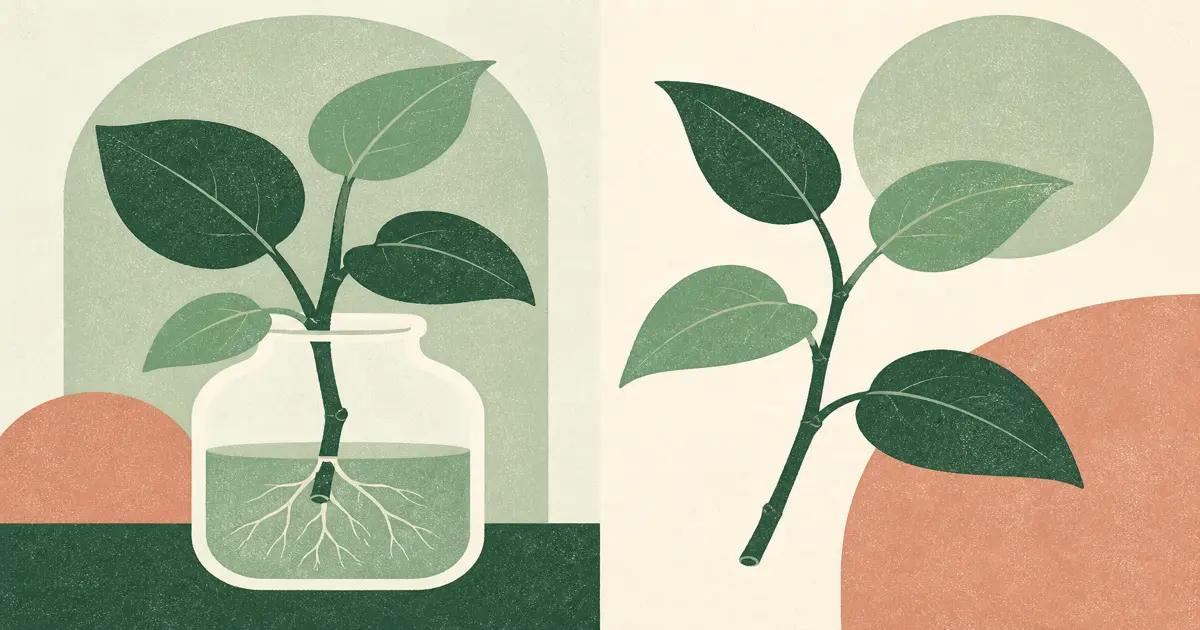
The short answer: Rooted vs unrooted cuttings are not the same product. Choose rooted when you want lower failure risk and clear root photos. Choose unrooted when the price is lower, the node looks firm, and you can finish rooting. Listings should say which one you are actually buying.
Buyers get burned when a photo shows a lush leaf and the parcel contains a soft, unrooted tip. Sellers get angry reviews when buyers expect a nursery plant from a three-node stick. This guide is for both sides and sits next to our plant cuttings explainer.
Soft next step: list cuttings with rooted status on Plantsnearby, or filter listings that state it clearly.
Rooted vs unrooted at a glance
Use that table as a sanity check, not a law. A rare unrooted Albo can still cost more than a common rooted pothos. The point is matching form, proof, and price.
What “rooted” should mean in a listing
Rooted means you can see roots, not that the seller hopes roots appear soon. Ask for a photo of the roots or rooting medium. Soil-stuffed pots with no root visible do not count as proof.
Freshly rooted cuttings can still be fragile. Tiny white roots that break in shipping are a known risk. Honest sellers say how long the cutting has been rooted and whether it has been hardened off outside a sealed prop box.
If the plant is fully established in a nursery pot with a dense root ball, consider calling it a plant, not a cutting. Words matter for price anchors.
What “unrooted” should mean
Unrooted means the buyer must create roots after arrival. The listing should show the node, the stem condition, and whether leaves are attached. A leaf with no node is not a cutting for most aroids.
Unrooted is normal for many collector trades. It is not a scam by itself. It becomes a problem when the price matches a rooted plant and the description hides the status.
Wet sticks, tip cuttings, and mid-cuttings behave differently. Say which form you are selling. Our how to pack plant cuttings guide separates packing needs by cutting type.
Price should follow risk
Unrooted cuttings usually sell for less because the buyer spends weeks watching for roots and can lose the cutting to rot. Rare cultivars still command high unrooted prices, but they should undercut equivalent rooted offers from the same seller.
Rooted cuttings cost more when roots are real and the plant is already growing. They should not cost full mature-plant prices unless size and establishment justify it.
Buyers: compare rooted vs unrooted options for the same cultivar before you impulse-buy the first pretty leaf photo. Sellers: keep both options labeled so you are not arguing in DMs later.
Shipping and packing differences
Unrooted cuttings often travel in slightly damp sphagnum or a dryish wrap that prevents rot. Soaking wet bags kill more cuttings than dry air does on short trips.
Rooted cuttings need root protection without drowning. Excess water in a sealed plastic bag during summer heat is a common failure. Ask about heat holds in hot weeks.
Local pickup reduces both risks. If you can buy plants near me, inspect firmness before you pay.
How this ties to offshoots and pups
Offshoots and pups are often already rooted on the mother plant, then separated. That is closer to a rooted start than to an unrooted tip. See plant offshoots and pups for that lane.
Do not mix vocabulary. Calling a pup an “unrooted cutting” confuses buyers and invites disputes.
Listing checklist for sellers
State rooted or unrooted in the title. Show the node or roots. State approximate size. State pickup or packing method. State when the photo was taken.
Buyers shopping plant cuttings for sale should treat missing rooted status as incomplete, not as a mystery bargain.
How buyers should compare two listings side by side
Open the rooted listing and the unrooted listing for the same cultivar if both exist. Note price, photo proof, and packing promises. A rooted cutting with no root photo can be riskier than an unrooted cutting with a crisp node photo and a patient seller.
Ask how long the rooted cutting has been out of a sealed prop cup. Brand-new roots can be more fragile in shipping than a cutting rooted for several weeks and lightly hardened.
For unrooted, ask what medium they recommend after arrival and whether the cutting was taken from a healthy mother plant recently or sat in a drawer. Fresh cuts usually outperform tired ones.
Seller messaging that reduces refund drama
Put “rooted” or “unrooted” in the first line of the description, not buried under emojis. Show the proof photo near the top of the gallery. State whether local pickup is available, because many buyers will choose handoff over mail once they understand the risk difference.
If you sell both forms, keep separate listings or clearly separated sections. Mixing prices in one vague post is how people feel misled even when you meant well.
If you are new to propagating, buy rooted once or twice so you learn watering without also learning how to callus a fresh cut. Once you can keep rooted starts alive, unrooted becomes a fair way to stretch a budget on cultivars you already understand. Sellers should say which audience a listing is for when the cutting is clearly advanced. A one-line note such as “best for growers who already root aroids” saves mismatched expectations.
Soft next steps
Compare rooted and unrooted listings on Plantsnearby, and read plant cuttings plus how to pack plant cuttings before you buy or ship.
Frequently Asked Questions
What is the difference between rooted and unrooted cuttings?
A rooted cutting already has visible roots. An unrooted cutting has a node or growth point but still needs to grow roots after you receive it.
Which is better, rooted or unrooted cuttings?
Rooted is usually safer if roots are real and firm. Unrooted is fine when the price is lower, the node looks healthy, and you already know how to root that plant.
Why are unrooted cuttings cheaper?
They usually cost less because the buyer takes on more rooting risk and waiting time. Price should still reflect cultivar rarity and cutting quality.
Do rooted cuttings ship better?
Often yes when roots are firm and packing is careful. Overly wet rooted cuttings can rot in transit. Unrooted tips can travel light if nodes stay firm.
Should sellers label rooted vs unrooted clearly?
Yes. Calling everything a “cutting” without rooted status is how disputes start. Put rooted or unrooted in the title and show proof photos.
Are wet sticks the same as unrooted cuttings?
Wet sticks are a type of leafless or low-leaf unrooted start. They need their own moisture and packing notes, not a copy-paste from a leafy tip cutting.