Succulent Cuttings for Sale: What to Expect
Succulent cuttings for sale are not the same as aroid nodes. Expect callused leaves or stems, dry packing, and honest size notes before you pay.
By Jordan Wells
Plantsnearby is reader-supported. As an Amazon Associate we earn from qualifying purchases. Learn more.
The short answer: Succulent cuttings for sale should name leaf vs stem, show the exact start, and stay mostly dry in packing. Wet tropical packing habits kill more succulents than cold weather does.
Succulent cuttings for sale move differently from Monstera nodes and Philodendron tips. Buyers often expect instant plants. Sellers often ship leaves that still need weeks to root. Both sides get happier when the listing says what form you are actually trading.
Use plant cuttings for general vocabulary and plant cuttings for sale for listing standards. Sellers packing boxes should read how to pack plant cuttings. Local trades can borrow plant swap etiquette. Broader seller habits live in how to sell plants.
Leaf props, stem tips, and pups are not one SKU
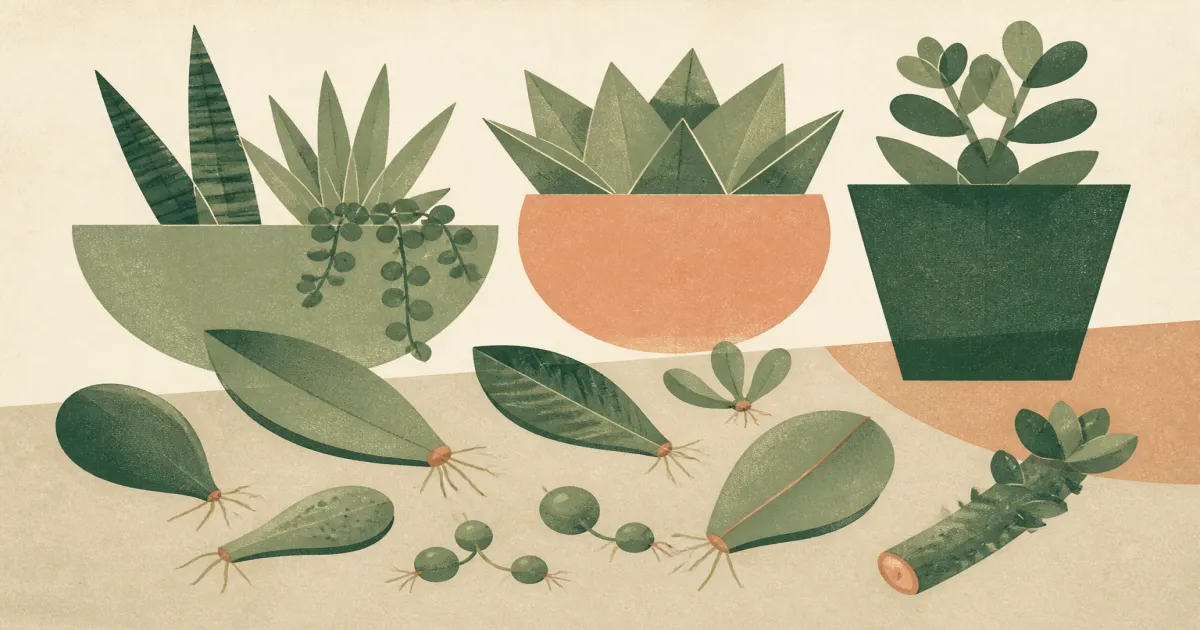
A leaf cutting is a start that may grow a plantlet at the base after callusing. A stem tip already has a growth point and usually moves faster. A rooted pup or offset is further along again. Mixing those words in one caption is how disputes start. If you are shopping a full jade plant for sale instead of tip cuttings, treat trunk size and root status as the product, not a leaf count alone.
Ask what you are buying in plain language. “Three Echeveria leaves, callused, unrooted” is a product. “Succulent cuttings, pretty” is not. Count matters. Size matters. Freshly snapped vs callused matters. Fresh cuts can rot if packed wet. Callused starts usually travel better.
Named cultivars should be labeled honestly. If the seller is unsure of the cultivar, say “unknown green rosette” instead of inventing a rare name. Buyers shopping rare houseplants already distrust mystery labels. Succulent markets have the same problem with recycled cultivar names.
If multiple leaves come from one mother plant, photograph a representative sample and state the count. Do not imply every leaf looks identical if one is damaged. Shown quirks with a fair price feel like honesty. Hidden mush found after payment feels like bait.
What buyers should demand before paying
Require today’s photos of the exact cuttings. Look for firm tissue, intact epidermis, and clean cut or callus ends. Soft, translucent, or blackened bases are a no. White fuzz in axils can be mealybugs. Ask for a close shot before money moves.
Confirm callused or freshly cut. Confirm rooted or unrooted. Rooted starts should show firm roots, not brown slime in old soil. Unrooted leaves need patience and a lower “instant plant” expectation. Price should track that timeline.
Ask how fulfillment works. Local pickup needs a short window and a dry bag or box. Shipping needs padding, low moisture, and a weather-hold policy for extreme heat or freeze. Succulent cuttings for sale without a packing note are guesses dressed as listings.
International buyers and sellers should be honest about live plant shipping and import rules. Those rules differ by country. We do not invent permit requirements here. If a border is involved and legality is vague, keep the deal local or skip it.
What sellers must put in the listing
State the product like a grown-up:
- Species or honest common name
- Leaf vs stem vs pup
- Count and approximate size
- Callused or freshly cut
- Rooted or unrooted
- Price and what it includes
- Local pickup window or shipping method
Photograph the cutting first, not only the mother plant. Fill the frame. Add a scale shot with a coin or ruler. Include any damage you already disclosed. Pretty mother-plant glamour shots alone cause refund chats.
If you sell trays of mixed leaf props, say so. Mixed mystery packs can be fun when priced and labeled as mixed. They become fights when marketed as a named rare cultivar set. Clarity is cheaper than arguments.
Write a short packing note if you ship. Paper wrap, dry poly or paper bag, padding, and “I hold for heat waves” is enough. Do not soak succulents before shipping “to keep them hydrated.” That habit creates rot. Slightly firm and dry is the goal. More packing detail lives in how to pack plant cuttings.
Pickup, shipping, and aftercare without drama
Local pickup is often easiest. You inspect once, pay, and go. Keep cuttings dry in the car. Do not leave a sealed wet bag on a hot dashboard. Public meetup spots work fine for small bags. Bring labels if you are swapping multiple kinds.
Shipping favors compact, callused starts over soft, freshly cut, leafy stems. Ask about weekend warehouse sits. Confirm who covers DOA for mush on arrival. Weather holds are normal adult behavior, not flaking.
After arrival, open the package, check for mold, and set cuttings in bright light with airflow. Many leaf props want a dry callus period on a tray before they see moisture. Do not bury a soft leaf in wet soil on day one. Quarantine new stock away from your main collection for one to two weeks while you watch for mealies.
rooting speed varies by genus, season, and light. Echeveria leaf props and some stem tips do not share the same calendar. Compare a few current succulent cuttings for sale listings of the same form before you decide what “fair” costs this month.
How we think about succulent cutting deals
We care about form honesty, dry packing, and pest visibility more than dramatic mother-plant photos. A boring shot of firm callused leaves beats a glamorous tray with soft bases. That is the standard we want when people list succulent cuttings for sale on Plantsnearby.
Sellers: write the count, the form, and the packing note before you post. Buyers: only pay when those three things are clear. When you are ready, find or list succulent cuttings with the checklist above, and treat dry tissue like the product feature it is.
Frequently Asked Questions
What should a succulent cuttings for sale listing include?
Leaf vs stem start, approximate size or count, callused or freshly cut, exact photos, and pickup or packing terms.
Do succulent cuttings need to be rooted before sale?
Not always. Many leaf props sell unrooted after a callus forms. Price and timeline should match that risk.
How do succulent cuttings ship?
Dry and padded usually beats wet bags. Succulents rot faster in sealed moisture than many tropical cuttings.
What pests show up on succulent cuttings?
Mealybugs hide in leaf axils and roots. Ask for close photos and quarantine new stock.
Can I trade succulent cuttings locally?
Yes. Label bags, keep them dry, and use the same honesty standards as a sale.
Are all “succulent cuttings” the same product?
No. A single leaf prop, a stem tip, and a rooted pup are different products with different prices.