Alocasia Corms for Sale: How to Buy a Viable Corm
Alocasia corms for sale are small, slow, and easy to mislabel. Buy a firm corm with clear size and cultivar information, not a mystery lump.
Plantsnearby is reader-supported. As an Amazon Associate we earn from qualifying purchases. Learn more.
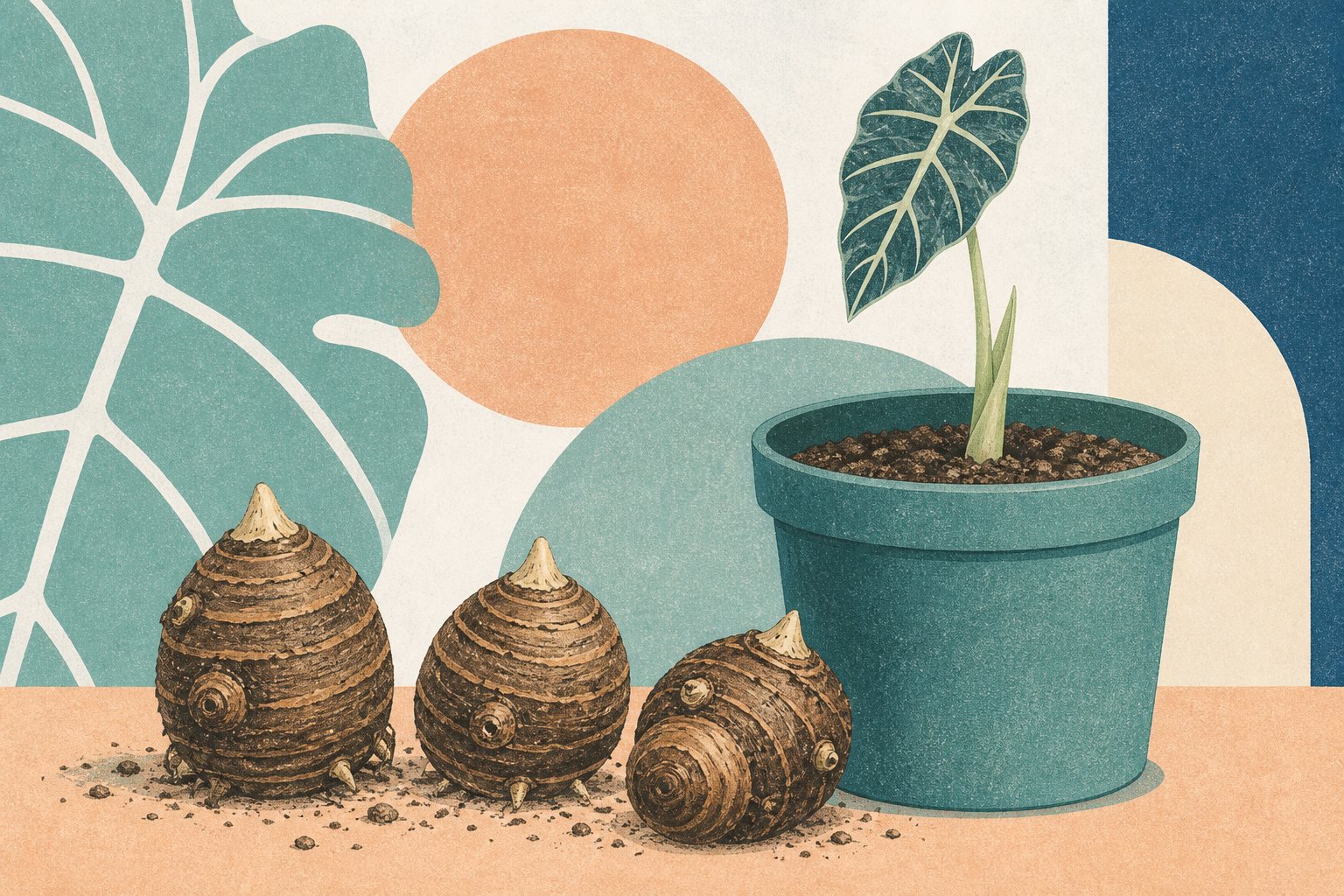
The short answer: A good Alocasia corm is firm, clearly sized, and sold with an honest cultivar claim. It is not a rooted plant and it may take time to sprout. Ask for a current close photo and shipping details before you buy.
Alocasia corms are appealing because they cost less than a finished collector plant and take little space to ship. They also invite vague listings. A tiny brown corm with an exciting cultivar name can be a good start, or it can be a soft lump with no viable growth point. This guide helps buyers judge the listing. Sellers can use it to avoid arguments before a package leaves.
Find or list collector starts on Plantsnearby with photos that show the actual corm and its size.
A corm is a start, not a display plant
A corm is a small storage structure that may grow into an Alocasia plant. It is not a cutting with leaves, and it is not a potted plant with a proven root system. That gap should show up in the price and in your expectations.
Some corms have a visible sprout point. Others are dormant-looking but firm. Both can be viable. A leafy plant costs more because you can see the result now. A corm costs less because the buyer accepts time and uncertainty.
If you want a plant you can place on a shelf immediately, shop Alocasia for sale instead. If you enjoy the growing stage, a well-described corm can be a sensible smaller purchase.
Ask for proof of firmness and size
The best listing has a current close photo, a ruler or coin for scale, and a description of how the seller stored the corm. Firm means solid when gently pressed, not shriveled, leaking, blackened, or mushy. The seller does not need to make dramatic claims. They do need to show what they are offering.
Size matters because it changes the wait. A larger firm corm with a visible start may move faster than a tiny one. It should not be priced like a small rooted plant just because the cultivar name is fashionable.
Ask whether the photo shows the exact corm or a representative one. Batch listings are acceptable when the seller shows the size range and says whether they choose the corm or the buyer selects it. “Similar to photo” without a size range is less useful.
Treat cultivar names carefully
Alocasia names can be confusing, especially for young plants. A seller should say whether the cultivar came from a labeled parent plant, a nursery tag, or their best guess. A guessed name is not worthless, but it should cost less than a confirmed identity.
Do not assume a named corm will instantly produce the leaf pattern in the listing photo. Juvenile growth can look different, and conditions affect what you see. Buy from a seller who explains the starting material plainly rather than promising a perfect mature leaf.
The same identity checks apply across aroid plants. A real name, exact photo, and honest form description are more useful than a long rare-plant caption.
Shipping and arrival checks
Corms are compact, so shipping is often practical. The package still needs protection from crushing, extreme heat, and cold. Ask when it will ship and whether the seller pauses during severe weather. A careful seller will not send a small living start into conditions that make arrival a gamble.
Open the package promptly. Photograph the corm before you discard packaging if it looks soft or damaged. Compare what arrived with the listing's stated size and count. Keep your message to the seller factual and early.
Firm corms may have a dry-looking outer layer. That is different from rot. A sour smell, wet collapse, or tissue that gives under light pressure is a warning. Do not pot obvious rot and hope it becomes a bargain.
Growing expectations after purchase
Give the corm a clean, airy starting medium and warm, steady conditions appropriate for Alocasia. Do not drown it because you want a leaf next week. Too much water is a common way to turn a healthy corm into mush.
Wait for signs of growth before treating it like a finished houseplant. A sprout can take time. Do not keep unpotting it every day to check progress. Patience is part of the lower price.
Keep new starts separate from the rest of your plants at first. Tiny corms do not carry the same leaf-pest risk as a big potted plant, but shared media and packaging can still create problems.
What sellers should state
Name the plant as accurately as you can, show each corm or the batch range, give a size reference, and say whether it has a visible sprout. State how it will ship and what weather delays you use. If it came from tissue culture or a particular parent, say that without implying more certainty than you have.
Price a corm as a growing project, not as a finished plant. Buyers are usually reasonable about a wait when the listing makes the wait obvious.
Bottom line
Alocasia corms for sale can be a lower-cost way into collector plants, but only when the listing proves firmness, size, and source. Buy the small start you can actually see, set realistic expectations, and avoid any corm that looks soft or mysteriously described.
The best first purchase is often a modest, clearly described corm from a seller who answers normal questions. It lets you learn the growing stage without paying finished-plant money for an unclear listing.
Frequently Asked Questions
What should a healthy Alocasia corm feel like?
It should feel firm for its size, with no leaking, sour smell, or soft dark patches.
Is an Alocasia corm the same as a rooted plant?
No. A corm is a small starting point that needs time and careful conditions before it becomes a leafy plant.
Can Alocasia corms be shipped?
They usually travel better than large leafy plants, but the seller still needs to prevent crushing and temperature exposure.